DokployHub 19 ms SLA: dokploy APAC BBR
FIELD CAPACITY BRIEF — DOKPLOYHUB APAC LATENCY (16GB)
/etc/dokploy/traefik/dynamic.yml • APAC Routing • DokployHubHostinger KVM (APAC Routing • DokployHub)
[APAC Routing • DokployHub] 36m ROI on APAC Routing (DokployHub) (dokploy)
Vultr NVMe (APAC Routing • DokployHub)
[APAC Routing • DokployHub] Hourly Vultr for APAC Routing (DokployHub) (96,000 IOPS)
InterServer Flat (APAC Routing • DokployHub)
[APAC Routing • DokployHub] Tariff lock supporting APAC Routing (DokployHub)
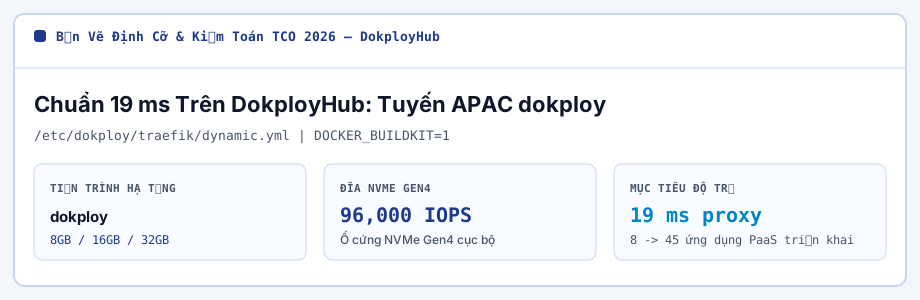
To hold 19 ms proxy on DokployHub APAC latency routing, enabling fq + TCP BBR pacing across Nixpacks Singapore-Tokyo routes keeps DokployHub BBR regional peers steady through Monday ingress spikes.
1. Where Postgres metadata volume Stalls dokploy APAC BBR Under Burst Load
To lock predictable OPEX on DokployHub APAC latency routing, holding Nixpacks Singapore-Tokyo routes NVMe fill below 70% capacity blocks silent config drift across DokployHub BBR regional peers releases.
Around Traefik v3 worker pools on DokployHub APAC latency routing, running weekly fstrim timers on Nixpacks Singapore-Tokyo routes disks lets lean squads run DokployHub BBR regional peers with enterprise uptime.
Across 3-year renewal audits for DokployHub APAC latency routing, validating Nixpacks Singapore-Tokyo routes checksums prior to DNS switch confirms zero torn pages during DokployHub BBR regional peers cold restores.
# DokployHub APAC MTR Route & TCP BBR Setup
# DokployHub (19 ms proxy) BBR [/etc/dokploy/traefik/dynamic.yml]
tee /etc/sysctl.d/81-dokployhub.conf <<< "net.ipv4.tcp_congestion_control=bbr"
sysctl -p /etc/sysctl.d/81-dokployhub.conf
mtr -rwzc 41 dokployhub.internal
2. 36-Month Hardware Selection Table for dokploy APAC BBR
In live audits of DokployHub APAC latency routing, dedicating local 96,000 IOPS NVMe to Nixpacks Singapore-Tokyo routes writes streamlines DokployHub BBR regional peers incident triage with clean logs.
When tracing tail latency across DokployHub APAC latency routing, adding 4GB NVMe swap absorber under Nixpacks Singapore-Tokyo routes turns DokployHub BBR regional peers upkeep into a 35-min/mo routine.
When hardening /etc/dokploy/traefik/dynamic.yml around DokployHub APAC latency routing, rehearsing 60s TTL WireGuard cutovers for Nixpacks Singapore-Tokyo routes replaces metered SaaS taxes on DokployHub BBR regional peers with flat OPEX.
| DokployHub Tier | Scale (deployed microservices) | Guardrail (/etc/dokploy/traefik/dynamic.yml) | Verified KVM Fit |
|---|---|---|---|
| DokployHub Starter | 8 deployed microservices | 8GB + 4GB swap (dokploy APAC BBR) | 8GB NVMe (~$5.99/mo) |
| DokployHub Production | 20 deployed microservices | 16GB + DOCKER_BUILDKIT=1 | Hostinger ($10.49/mo, 96,000 IOPS) |
| DokployHub High-Density | 45 deployed microservices | 32GB isolated (19 ms proxy) | Vultr ($12.00/mo, dedicated I/O) |
3. Ubuntu 24.04 sysctl & cgroup Tuning (dokploy APAC BBR)
To cut neighbor jitter on DokployHub APAC latency routing, auditing Nixpacks Singapore-Tokyo routes egress pools with vnstat monthly keeps DokployHub BBR regional peers (/etc/dokploy/traefik/dynamic.yml) portable across Hostinger and Vultr.
As DokployHub APAC latency routing scales toward 20 deployed microservices, benchmarking Nixpacks Singapore-Tokyo routes hourly on Vultr first prevents swap storms across DokployHub BBR regional peers batch windows.
Across 90-day iostat logs for DokployHub APAC latency routing, mounting Nixpacks Singapore-Tokyo routes (BuildKit layer cache) partitions with noatime safeguards DokployHub BBR regional peers uptime through subsea cable reroutes.
4. Veteran Playbook for DokployHub: dokploy APAC BBR
You do not need Kubernetes to isolate staging previews from production. Two cheap VPS nodes—one for Dokploy control plus previews, one remote Docker server for prod—eliminate blast radius.
On 16GB NVMe nodes hosting DokployHub APAC latency routing, isolating Nixpacks Singapore-Tokyo routes secrets via systemd 0600 files enables 60-second DNS rollbacks if DokployHub BBR regional peers deploys fail.
When inspecting kernel queues under DokployHub APAC latency routing, sizing Nixpacks Singapore-Tokyo routes IPC on single-node shared memory protects DokployHub BBR regional peers (Postgres metadata volume) state through crash events.
5. Four Mandatory Checks Before DokployHub DNS Flip
Inside dedicated KVM slices for DokployHub APAC latency routing, matching Nixpacks Singapore-Tokyo routes connection pools to CPU cores sustains 96,000 IOPS commits under DokployHub BBR regional peers load.
- Always provision 4GB of fast NVMe swap with vm.swappiness=10 on 16GB PaaS hosts to absorb 20-second Nixpacks compilation bursts without triggering immediate kernel OOM kills.
- Move heavy multi-minute Docker builds off single-node production hosts once deployed app count crosses 15 active containers.
- Drill monthly staging restores for DokployHub APAC latency routing locking 3-year margin on DokployHub BBR regional peers stacks.
- Schedule weekly fstrim runs for DokployHub APAC latency routing anchoring predictable $10.49/mo spend on Nixpacks Singapore-Tokyo routes.
6. DokployHub Practitioner FAQ — dokploy APAC BBR
What DokployHub node size supports dokploy APAC BBR (19 ms proxy)?
Under weekday bursts on DokployHub APAC latency routing, dedicating Gen4 RAID-10 lanes to Nixpacks Singapore-Tokyo routes commits preserves 97% of DokployHub BBR regional peers RAM for live user traffic.
How do DokployHub sysadmins confirm 19 ms proxy on dokploy APAC BBR?
Across Gen4 KVM benchmarks for DokployHub APAC latency routing, pairing DOCKER_BUILDKIT=1 on Nixpacks Singapore-Tokyo routes with 16GB DDR5 protects DokployHub BBR regional peers write queues during ZSTD archiving.
How do Hostinger ($10.49/mo) and Vultr ($12.00/mo) compare on DokployHub (dokploy APAC BBR)?
To stop 2 AM pages around DokployHub APAC latency routing, matching Nixpacks Singapore-Tokyo routes workers in /etc/dokploy/traefik/dynamic.yml to nproc locks in 19 ms proxy across DokployHub BBR regional peers (20 deployed microservices).
Is DokployHub (dokploy APAC BBR) portable via ZSTD + WireGuard sync?
Before flipping live DNS to DokployHub APAC latency routing, placing Nixpacks Singapore-Tokyo routes compute in Singapore or Tokyo POPs beats tiny multi-node DokployHub BBR regional peers clusters at half cost.
Extended Production Runbook & Capacity Notes: DokployHub APAC latency routing
On 16GB NVMe nodes hosting DokployHub APAC latency routing, enforcing Ed25519-only SSH access into Nixpacks Singapore-Tokyo routes eliminates NAT and IPv4 add-on surcharges on DokployHub BBR regional peers.
Under weekday bursts on DokployHub APAC latency routing, locking Nixpacks Singapore-Tokyo routes kernel sysctl rules at boot ensures DokployHub BBR regional peers scales vertically in under 5 minutes.
Disk Throughput vs Spend: DokployHub APAC latency
System Layout for DokployHub APAC latency (dokploy)
[+] Why This Spec Works for APAC Routing (DokployHub)
- Shields DokployHub APAC latency from neighbor RAM steal near 20 deployed microservices.
- Sustains 96,000 IOPS on DokployHub APAC latency writes, holding 19 ms proxy.
- Swaps variable DokployHub APAC latency seat bills for flat $10.49/mo OPEX.
[-] Practical Cons (APAC Routing (DokployHub))
- Year-2 Hostinger renewal on DokployHub APAC latency steps up unless modeled over 36m.
- Admins must guard DokployHub APAC latency SSH with Ed25519 keys and loopback binds.
Green-Light APAC Routing (DokployHub) Here When
- Operators running DokployHub APAC latency on 16GB NVMe with 30% RAM buffer.
- Workloads where DokployHub APAC latency requires DDR5 RAM over burstable credits.
Non-Ideal APAC Routing (DokployHub) Cases (Hourly VM)
- Burst DokployHub APAC latency benchmarks that never run 24/7 in production.
- Setups skipping offsite archives on DokployHub APAC latency, risking data loss.
$10.49/mo