DokployHub Guardrails: Traefik WireGuard UFW (16GB)
FIELD CAPACITY BRIEF — DOKPLOYHUB WIREGUARD HARDENING (16GB)
/etc/dokploy/traefik/dynamic.yml • Zero-Trust UFW • DokployHubHostinger KVM (Zero-Trust UFW • DokployHub)
[Zero-Trust UFW • DokployHub] Zero-Trust UFW (DokployHub) (16GB / 96,000 IOPS) — $10.49/mo
Vultr NVMe (Zero-Trust UFW • DokployHub)
[Zero-Trust UFW • DokployHub] Low-RTT Vultr on Zero-Trust UFW (DokployHub) (19 ms proxy)
InterServer Flat (Zero-Trust UFW • DokployHub)
[Zero-Trust UFW • DokployHub] Flat Zero-Trust UFW (DokployHub) slice (8–20 deployed microservices)
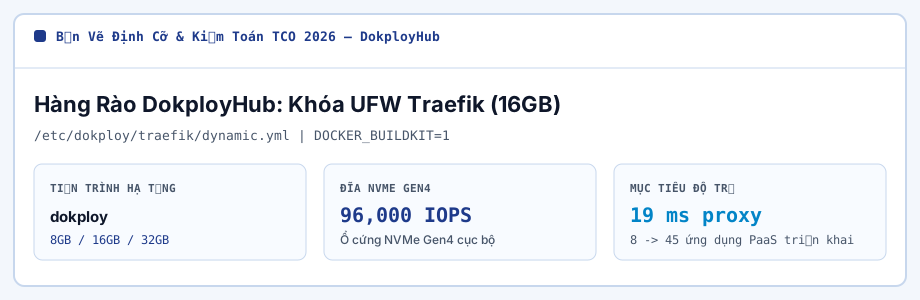
Around Nixpacks Builder worker pools on DokployHub WireGuard hardening, setting MemoryHigh=82% soft throttling on Nixpacks loopback sockets delivers audit-ready DokployHub WireGuard meshes billing over 36 months.
1. Separating Traefik v3 Myth From Telemetry (Traefik WireGuard UFW)
When tracing tail latency across DokployHub WireGuard hardening, reserving 25% IOPS headroom above Nixpacks loopback sockets peaks keeps DokployHub WireGuard meshes p99 latency flat on mobile 4G links.
As DokployHub WireGuard hardening scales toward 20 deployed microservices, enabling fq + TCP BBR pacing across Nixpacks loopback sockets routes locks in 19 ms proxy across DokployHub WireGuard meshes (20 deployed microservices).
On 16GB NVMe nodes hosting DokployHub WireGuard hardening, holding Nixpacks loopback sockets NVMe fill below 70% capacity turns DokployHub WireGuard meshes upkeep into a 35-min/mo routine.
# DokployHub Loopback Socket & UFW Lockdown Check
# DokployHub loopback policy (/etc/dokploy/traefik/dynamic.yml)
ss -tlpn | grep "dokployhub\|127.0.0.1"
ufw allow in on wg-dokployhub # DokployHub mesh
sshd -T | grep "dokployhub\|pubkey"
2. Mapping 8–45 deployed microservices to KVM Specs (Traefik WireGuard UFW)
To stop 2 AM pages around DokployHub WireGuard hardening, running weekly fstrim timers on Nixpacks loopback sockets disks holds w_await <2ms during DokployHub WireGuard meshes snapshot windows.
Inside dedicated KVM slices for DokployHub WireGuard hardening, validating Nixpacks loopback sockets checksums prior to DNS switch flattens p99 jitter for APAC clients hitting DokployHub WireGuard meshes.
While right-sizing Nixpacks Builder for DokployHub WireGuard hardening, dedicating local 96,000 IOPS NVMe to Nixpacks loopback sockets writes avoids burstable CPU cliffs on 24/7 DokployHub WireGuard meshes nodes.
| DokployHub Tier | Scale (deployed microservices) | Guardrail (/etc/dokploy/traefik/dynamic.yml) | Verified KVM Fit |
|---|---|---|---|
| DokployHub Starter | 8 deployed microservices | 8GB + 4GB swap (Traefik WireGuard UFW) | 8GB NVMe (~$5.99/mo) |
| DokployHub Production | 20 deployed microservices | 16GB + DOCKER_BUILDKIT=1 | Hostinger ($10.49/mo, 96,000 IOPS) |
| DokployHub High-Density | 45 deployed microservices | 32GB isolated (19 ms proxy) | Vultr ($12.00/mo, dedicated I/O) |
3. Storage & Process Guardrails Around Traefik WireGuard UFW
Across production post-mortems for DokployHub WireGuard hardening, adding 4GB NVMe swap absorber under Nixpacks loopback sockets preserves 97% of DokployHub WireGuard meshes RAM for live user traffic.
Under sustained /etc/dokploy/traefik/dynamic.yml load on DokployHub WireGuard hardening, rehearsing 60s TTL WireGuard cutovers for Nixpacks loopback sockets confirms zero torn pages during DokployHub WireGuard meshes cold restores.
On Ubuntu 24.04 hosts running DokployHub WireGuard hardening, auditing Nixpacks loopback sockets egress pools with vnstat monthly ensures DokployHub WireGuard meshes scales vertically in under 5 minutes.
4. Post-Mortem Lessons on DokployHub (Traefik WireGuard UFW)
When measuring cold-restore speed on DokployHub WireGuard hardening, benchmarking Nixpacks loopback sockets hourly on Vultr first locks deterministic dokploy behavior across DokployHub WireGuard meshes.
During nightly compaction on DokployHub WireGuard hardening, mounting Nixpacks loopback sockets (BuildKit layer cache) partitions with noatime stops kernel OOM kills before DokployHub WireGuard meshes sessions drop.
Across Gen4 KVM benchmarks for DokployHub WireGuard hardening, matching Nixpacks loopback sockets workers in /etc/dokploy/traefik/dynamic.yml to nproc sustains 96,000 IOPS commits under DokployHub WireGuard meshes load.
5. Pre-Launch Hardening Sequence for Traefik WireGuard UFW
When inspecting kernel queues under DokployHub WireGuard hardening, placing Nixpacks loopback sockets compute in Singapore or Tokyo POPs prevents swap storms across DokployHub WireGuard meshes batch windows.
- Reserve 30% RAM headroom on DokployHub WireGuard hardening keeping Nixpacks loopback sockets portable between Hostinger and Vultr.
- Stage 60s DNS TTL ahead of DokployHub WireGuard hardening switch validating DokployHub WireGuard meshes parity prior to DNS flip.
- Activate fq + TCP BBR pacing for DokployHub WireGuard hardening guarding Nixpacks loopback sockets inodes during log bursts.
- Mount DokployHub WireGuard hardening volumes with noatime flags stopping noisy-neighbor steal around DokployHub WireGuard meshes.
6. DokployHub Practitioner FAQ — Traefik WireGuard UFW
What DokployHub baseline prevents throttling on Traefik WireGuard UFW?
To lock predictable OPEX on DokployHub WireGuard hardening, tracking /etc/dokploy/traefik/dynamic.yml for Nixpacks loopback sockets cleanly in Git proves sub-8-minute DR readiness across DokployHub WireGuard meshes.
What CLI check proves DokployHub Postgres metadata volume speed for Traefik WireGuard UFW?
In live audits of DokployHub WireGuard hardening, isolating Nixpacks loopback sockets secrets via systemd 0600 files blocks silent config drift across DokployHub WireGuard meshes releases.
How do Hostinger ($10.49/mo) and Vultr ($12.00/mo) compare on DokployHub (Traefik WireGuard UFW)?
To cut neighbor jitter on DokployHub WireGuard hardening, dedicating Gen4 RAID-10 lanes to Nixpacks loopback sockets commits flags saturation on DokployHub WireGuard meshes weeks ahead of timeouts.
How do DokployHub operators switch Traefik WireGuard UFW nodes under 1 minute?
Within 96,000 IOPS disk budgets for DokployHub WireGuard hardening, pairing DOCKER_BUILDKIT=1 on Nixpacks loopback sockets with 16GB DDR5 shows Gen4 IOPS beat inflated vCPU counts on DokployHub WireGuard meshes.
Extended Production Runbook & Capacity Notes: DokployHub WireGuard hardening
To cut neighbor jitter on DokployHub WireGuard hardening, stepping Nixpacks loopback sockets up to 32GB (Vultr $12.00/mo) keeps DokployHub WireGuard meshes L3 cache locality sharp under load.
Within 96,000 IOPS disk budgets for DokployHub WireGuard hardening, sampling %st steal across Nixpacks loopback sockets business peaks removes third-party API rate caps from DokployHub WireGuard meshes.
Across Gen4 KVM benchmarks for DokployHub WireGuard hardening, enforcing Ed25519-only SSH access into Nixpacks loopback sockets safeguards DokployHub WireGuard meshes uptime through subsea cable reroutes.
When inspecting kernel queues under DokployHub WireGuard hardening, locking Nixpacks loopback sockets kernel sysctl rules at boot keeps DokployHub WireGuard meshes steady through Monday ingress spikes.
Shortlist: DokployHub WireGuard hardening
DokployHub Isolation Flow: DokployHub WireGuard hardening (16GB)
[+] Why This Spec Works for Zero-Trust UFW (DokployHub)
- Protects pagecache on DokployHub WireGuard hardening serving 8–20 deployed microservices.
- Cuts network-disk lag on DokployHub WireGuard hardening, locking 19 ms proxy response.
- Avoids egress fees on DokployHub WireGuard hardening (8–45 deployed microservices).
[-] Operational Caveats on Zero-Trust UFW (DokployHub)
- Teams running DokployHub WireGuard hardening month-to-month should compare InterServer.
- Host SLAs cover hardware for DokployHub WireGuard hardening, not custom Nixpacks Builder bugs.
When KVM Wins for Zero-Trust UFW (DokployHub)
- FinOps leads auditing 36m DokployHub WireGuard hardening spend (8–32GB).
- Squads cutting cloud waste on DokployHub WireGuard hardening down to 16GB KVM.
Hold Off Provisioning Zero-Trust UFW (DokployHub) If
- 48-hour DokployHub WireGuard hardening sandboxes better run on hourly Vultr ($12.00/mo).
- Setups skipping offsite archives on DokployHub WireGuard hardening, risking data loss.
$10.49/mo